The Argument
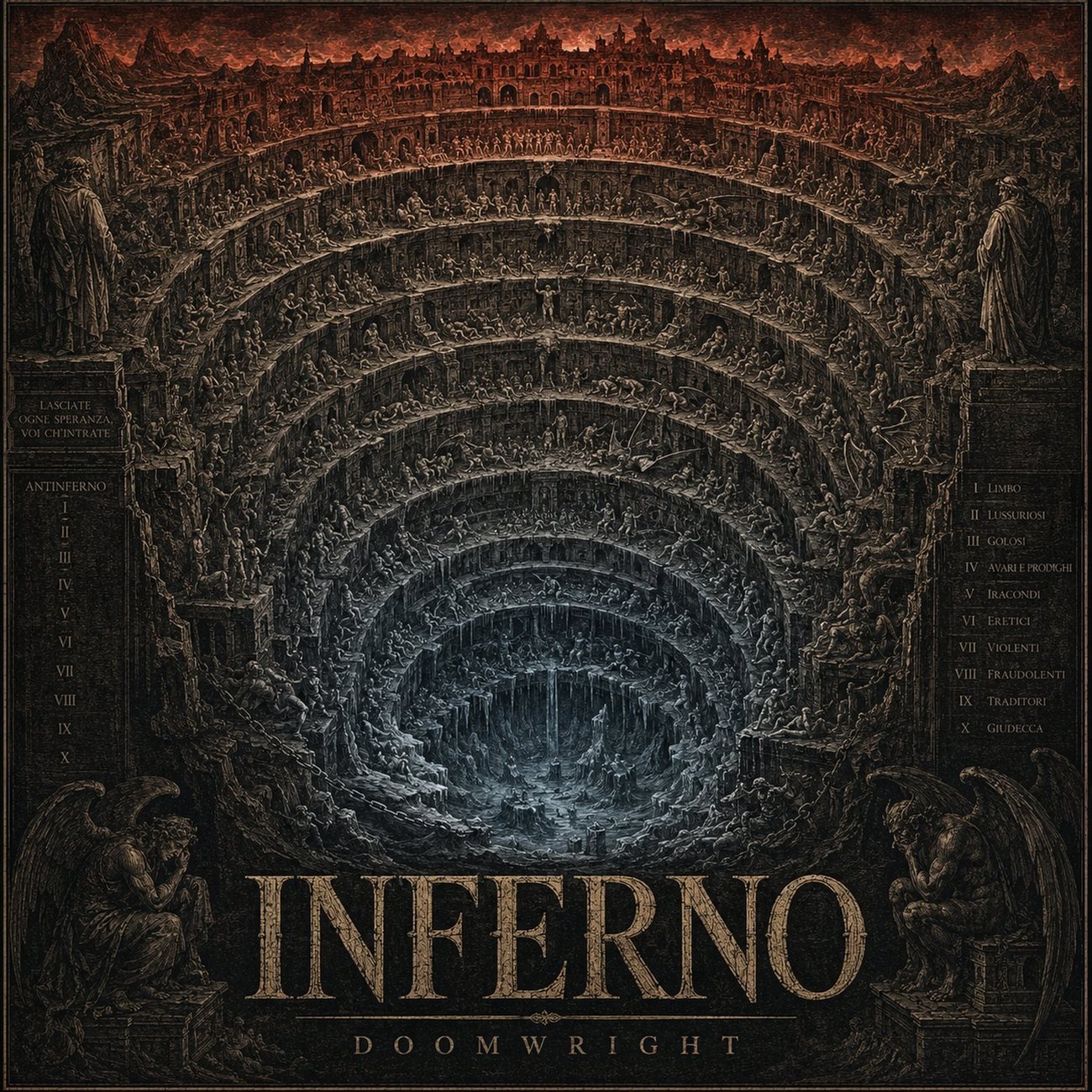
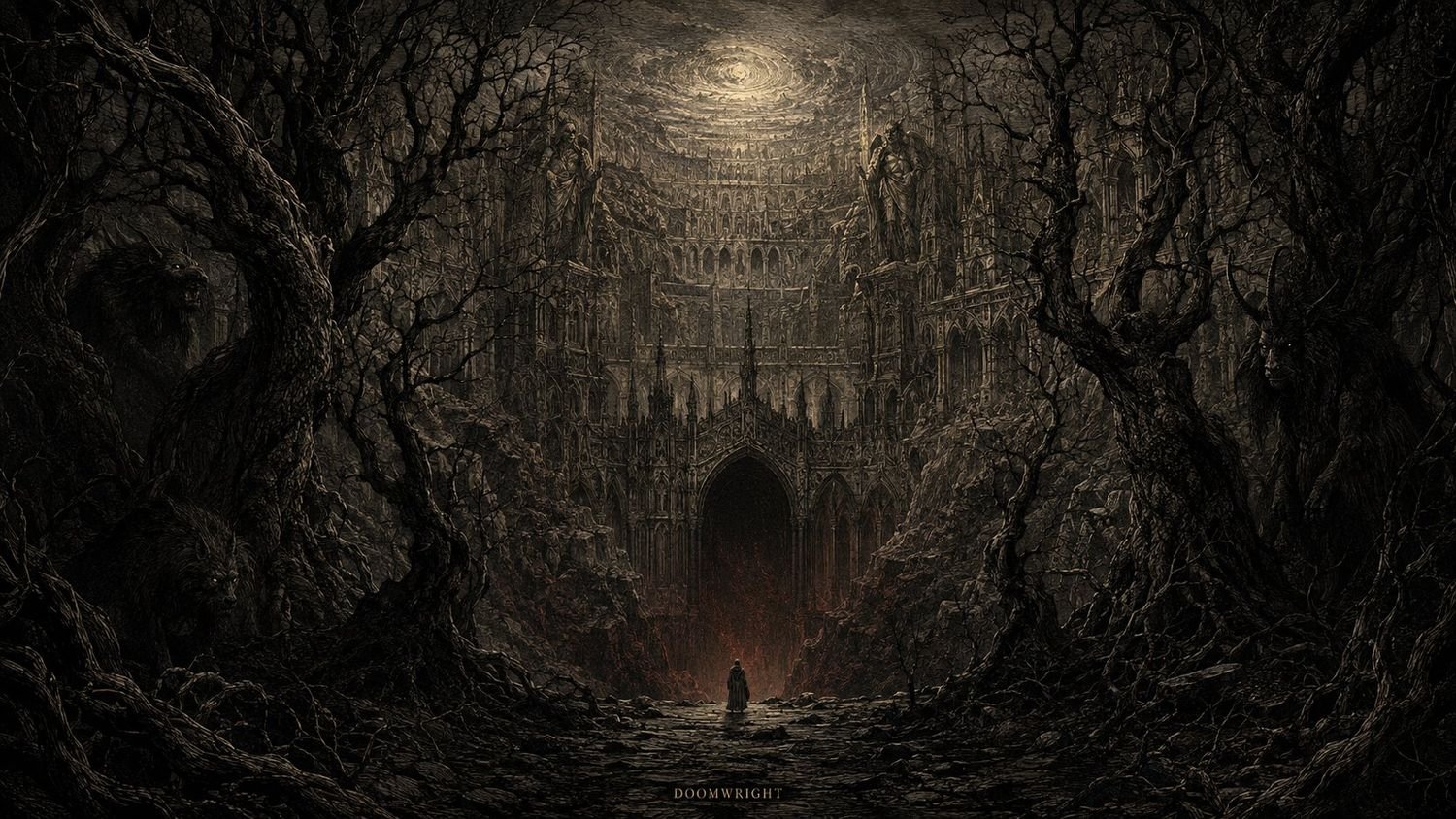
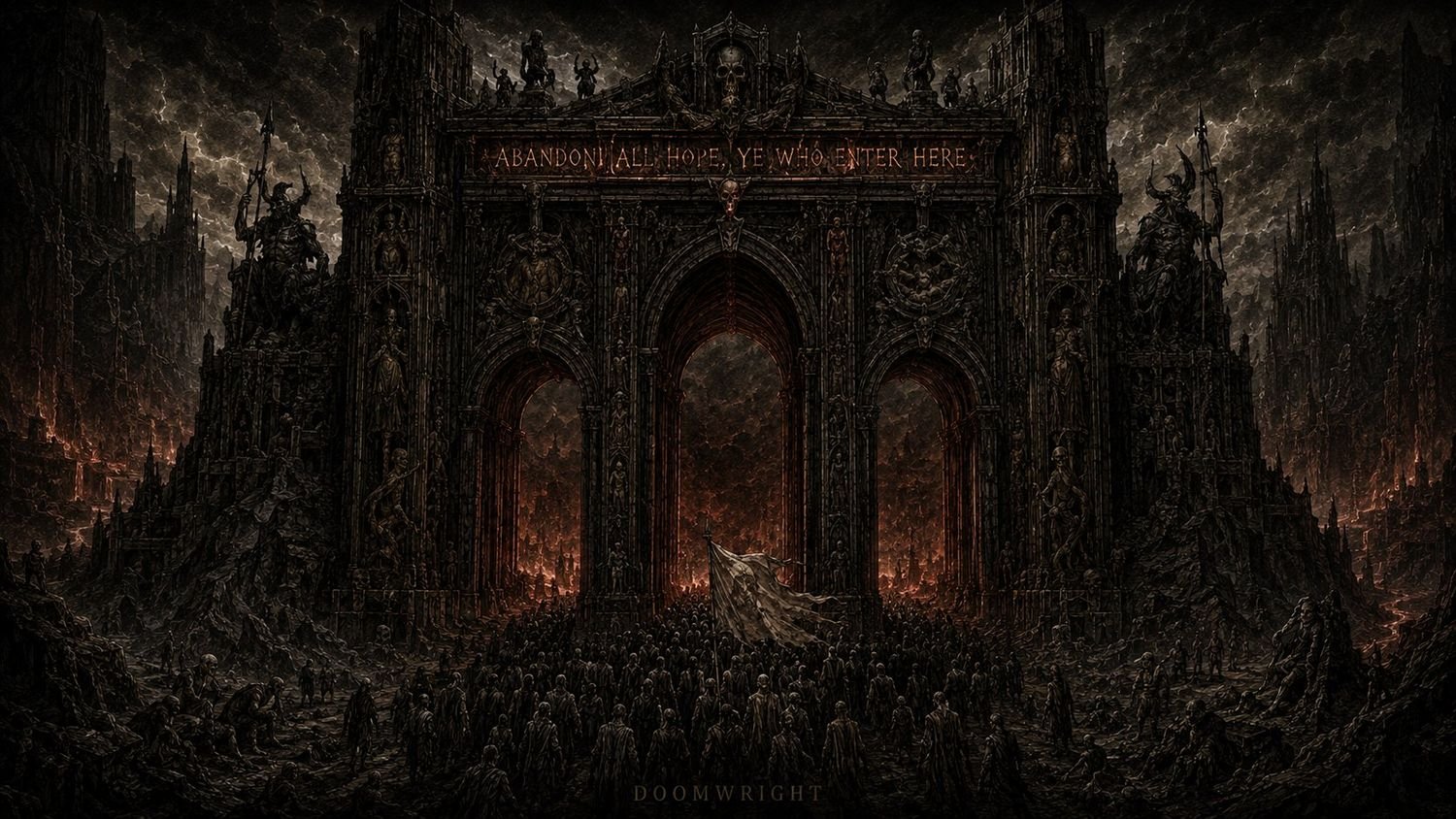
Midway through the road of his life a man wakes in a dark wood where every path has closed, three beasts barring the slope back toward the light. A guide comes up out of the dead — one who knew the road and cannot walk beyond its end — and leads him not out but down, beneath a gate whose only counsel is to abandon all hope.
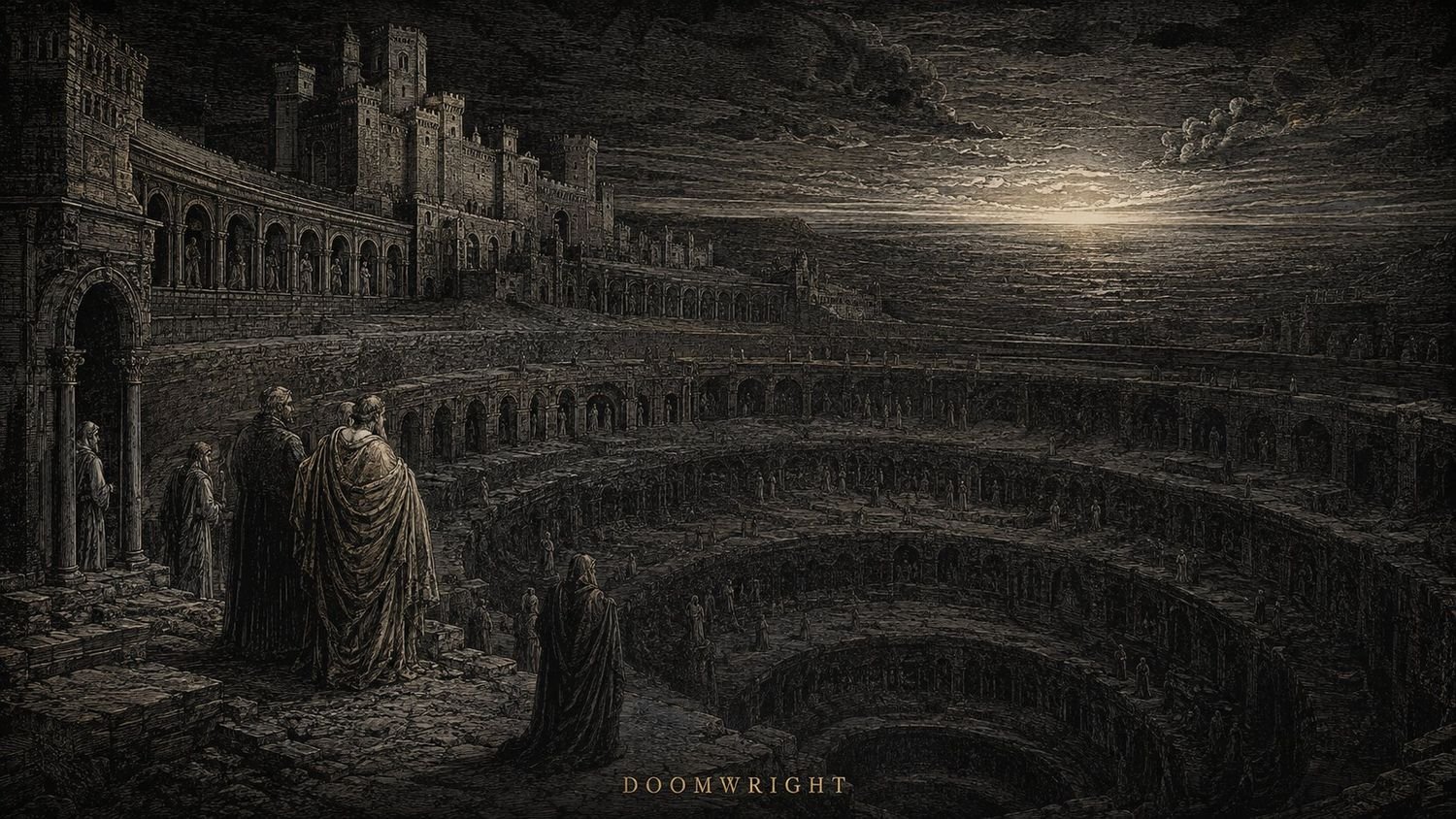
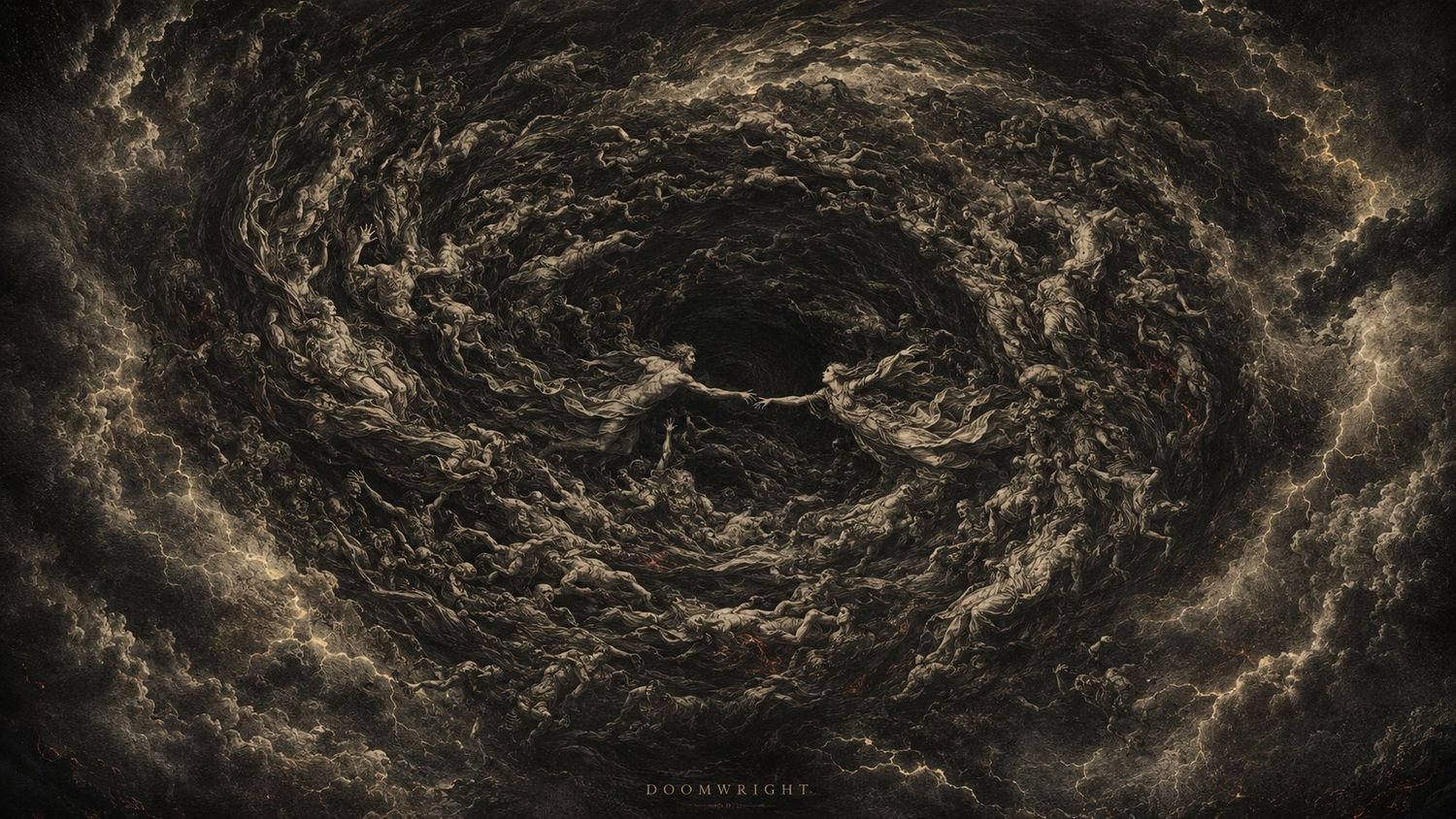
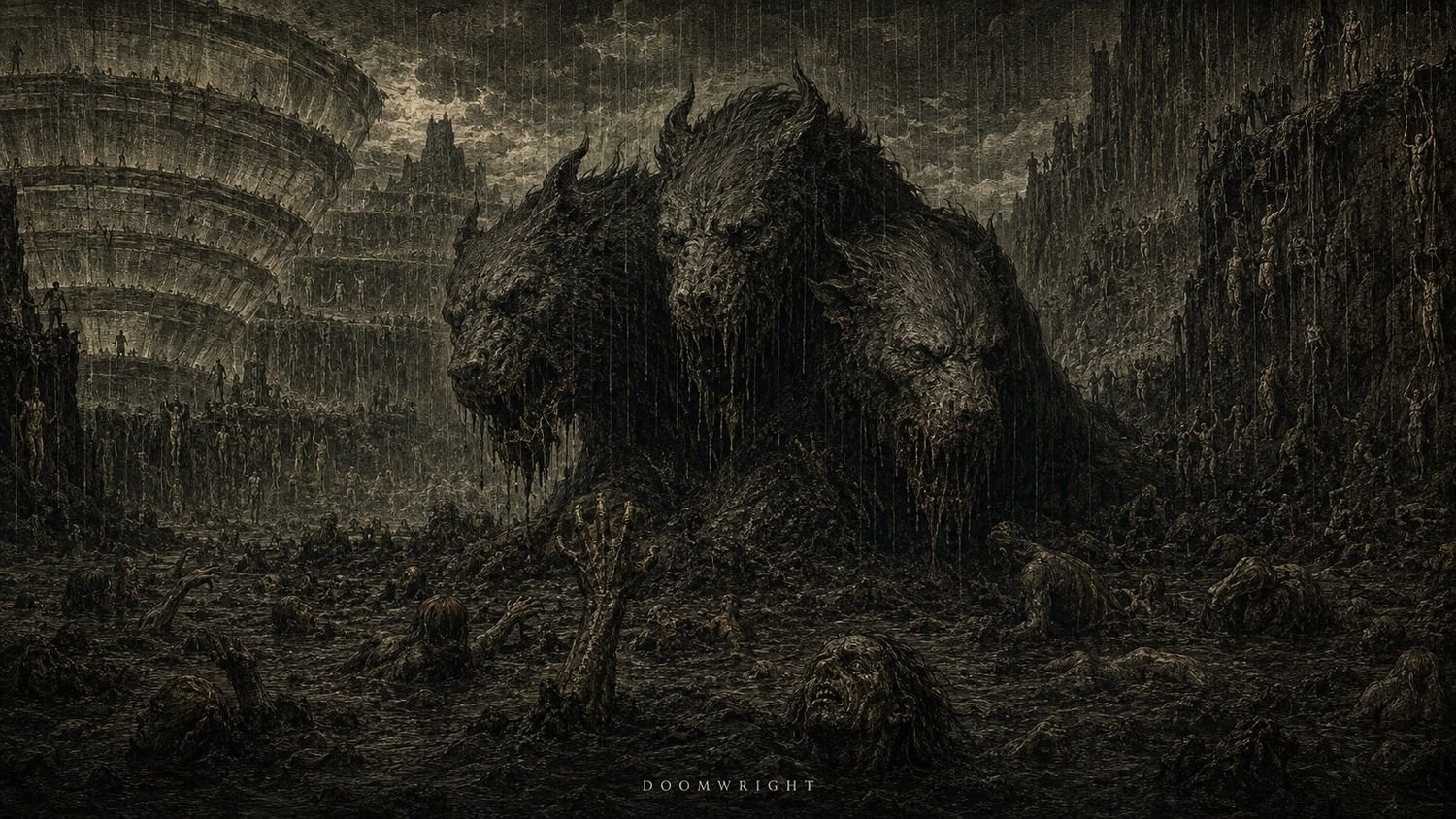
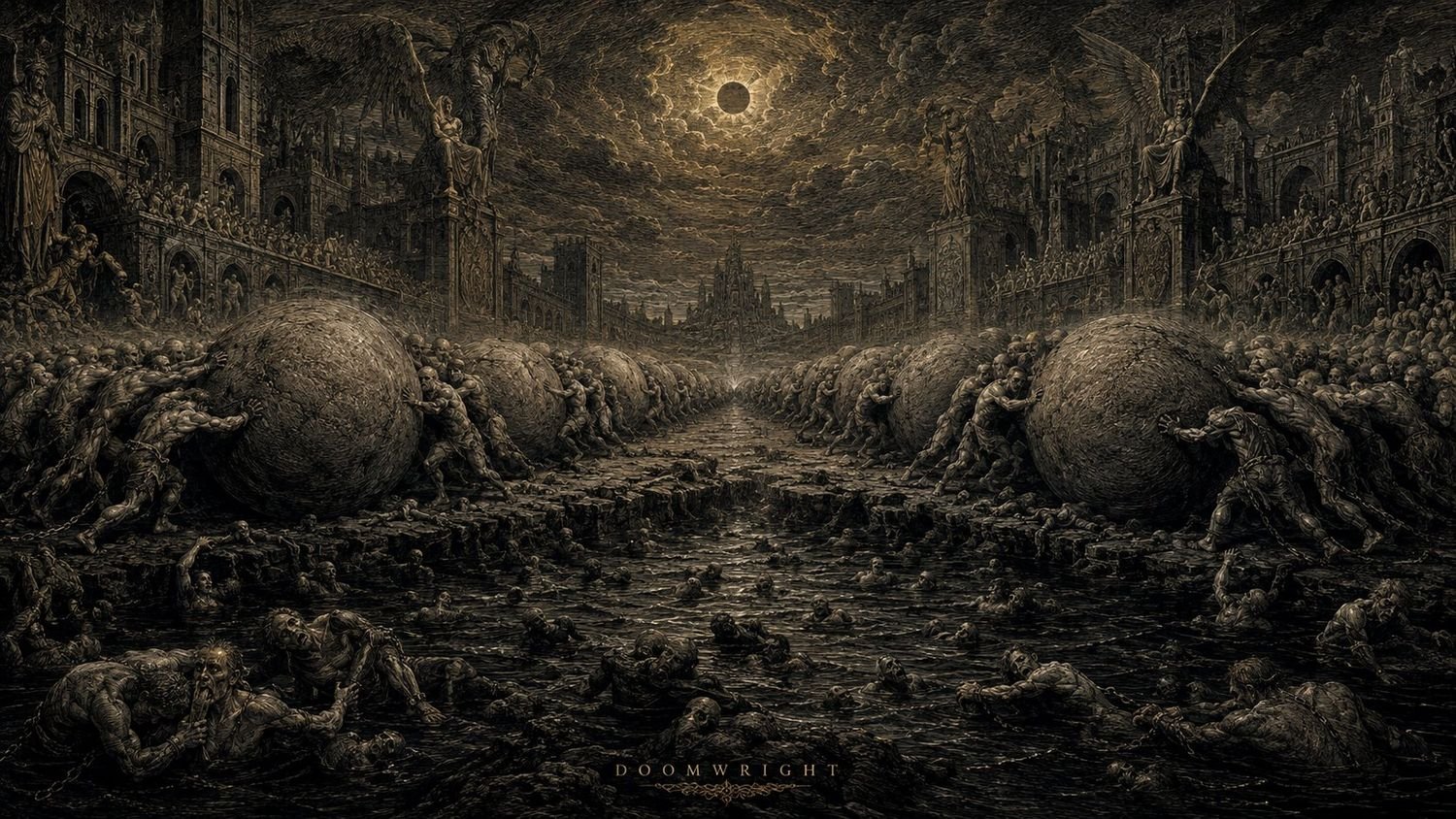
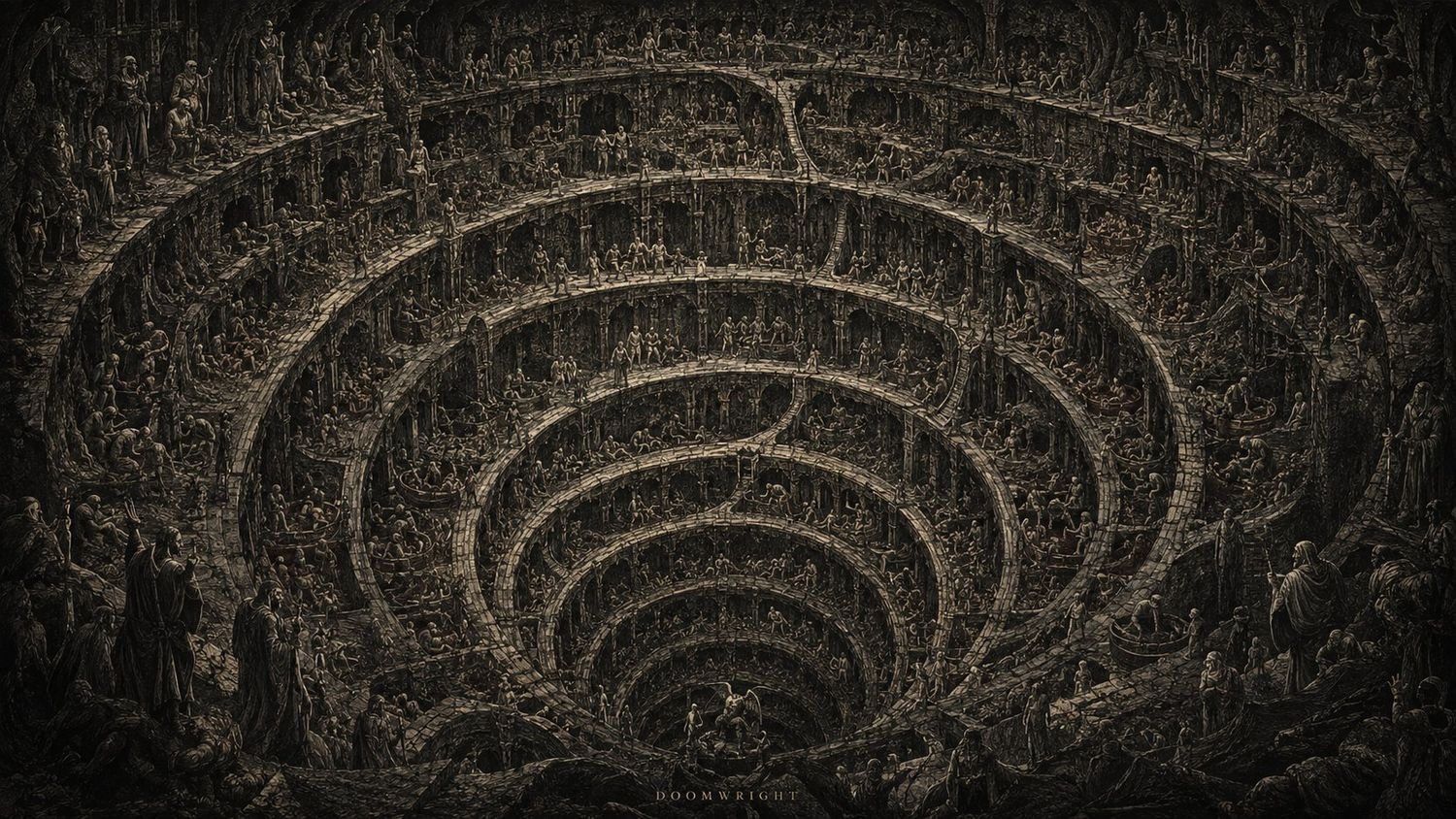
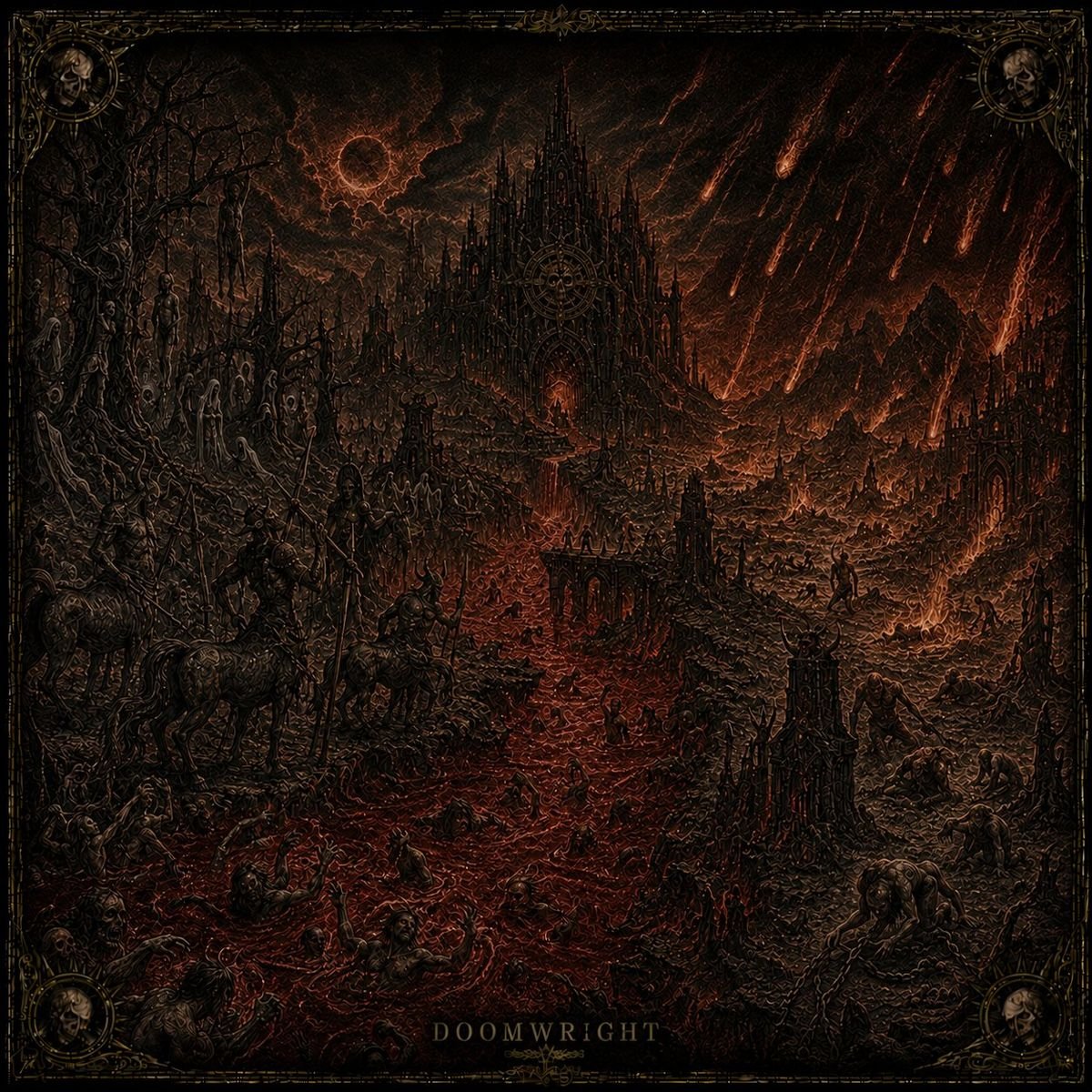
They pass the ones who live without hope of death; the lovers turned to weather in a storm that never sets them down; the gluttons wallowing under a cold rain that never warms; the hoarders and wasters heaving dead weights against each other forever. Each punishment is a desire made into a motion that cannot stop — the sin itself, handed back as an eternity.
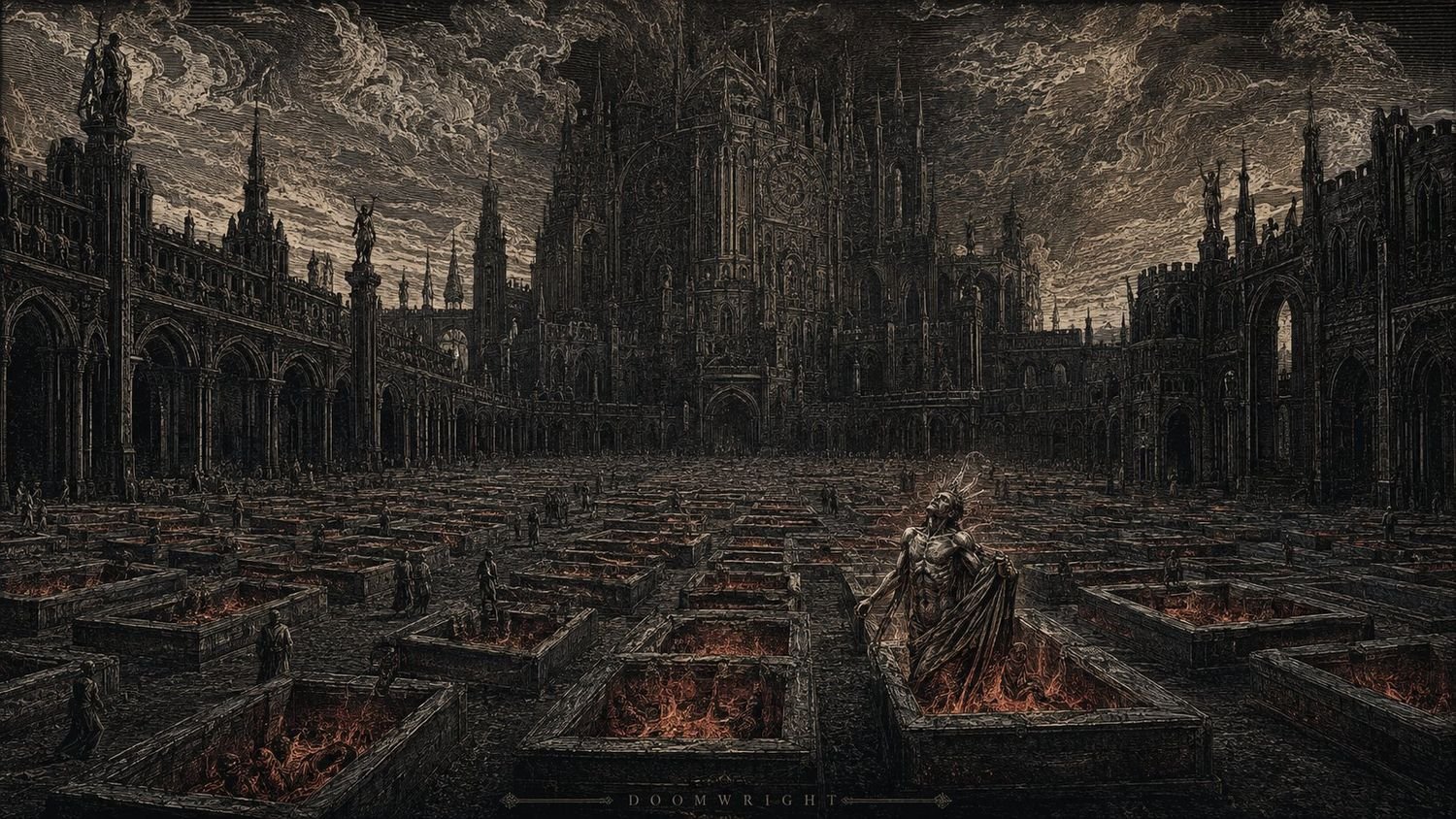
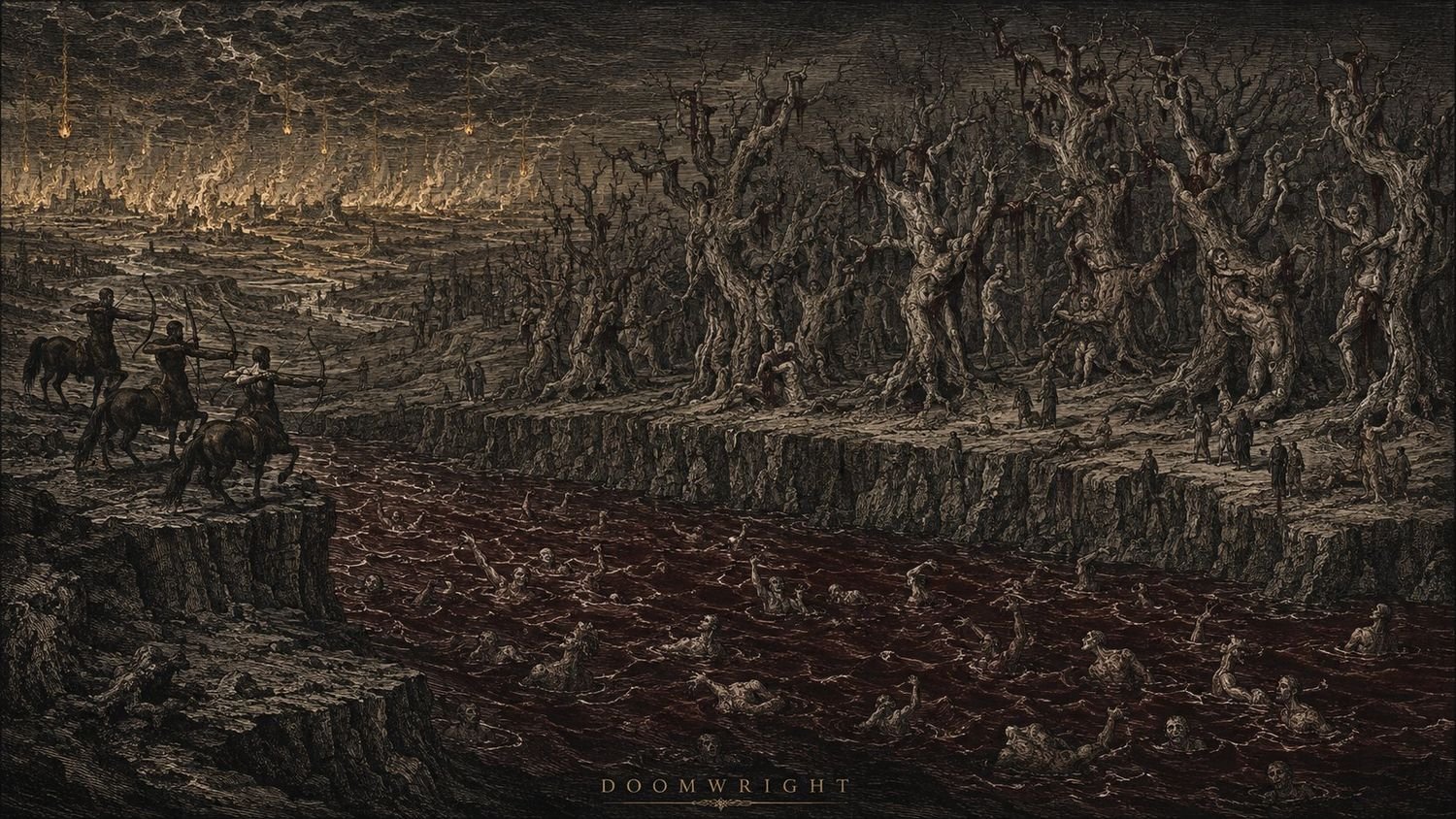
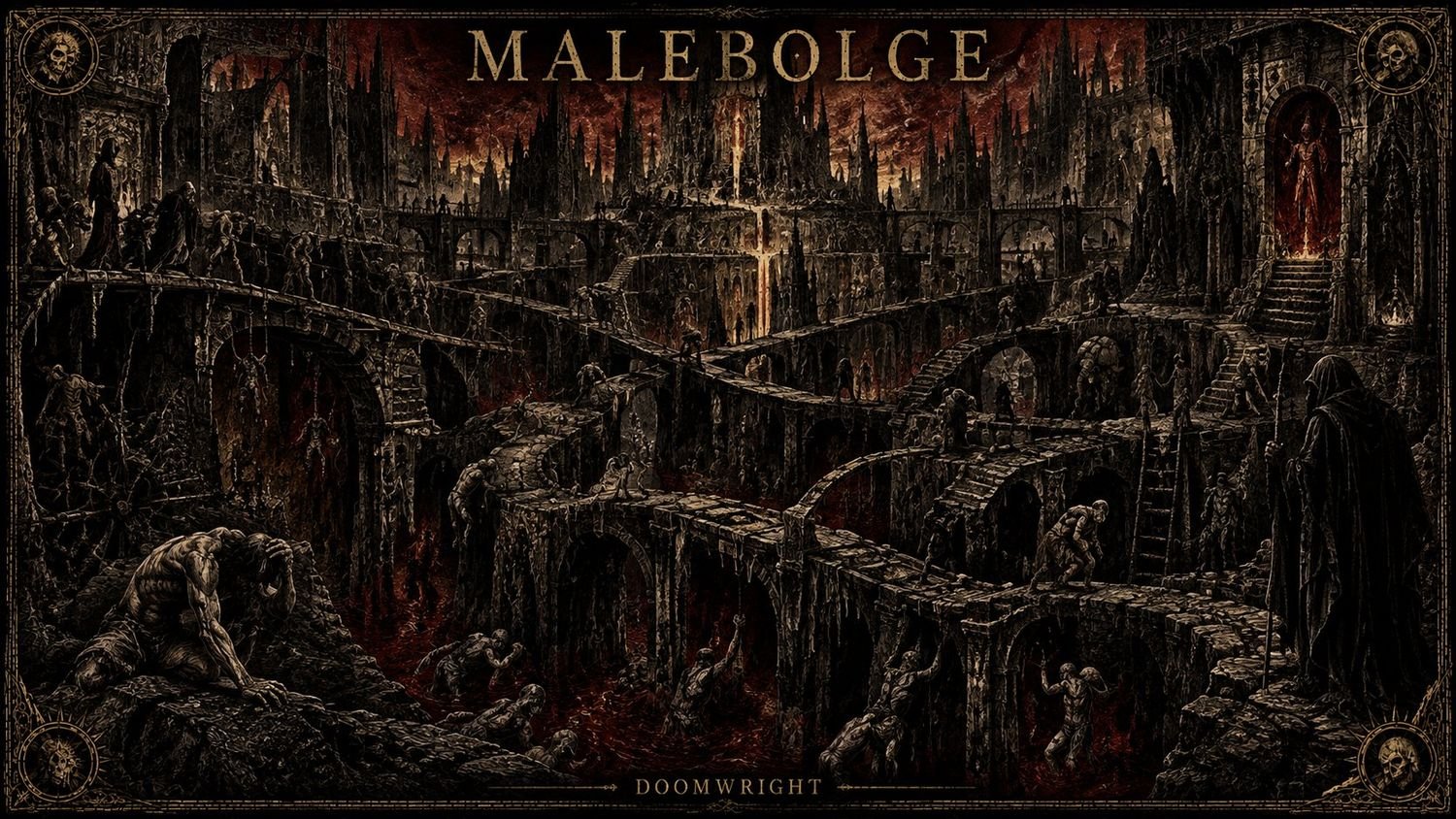
Lower, past the burning tombs of those who denied the soul, they come to the river of blood, the wood that bleeds when it is broken, and the desert under a slow rain of fire; then into Malebolge, the stone ditches of fraud, where every road is built to deceive. And the deeper they descend, the less Hell is able to move — the fastest voices falling silent, one circle at a time.
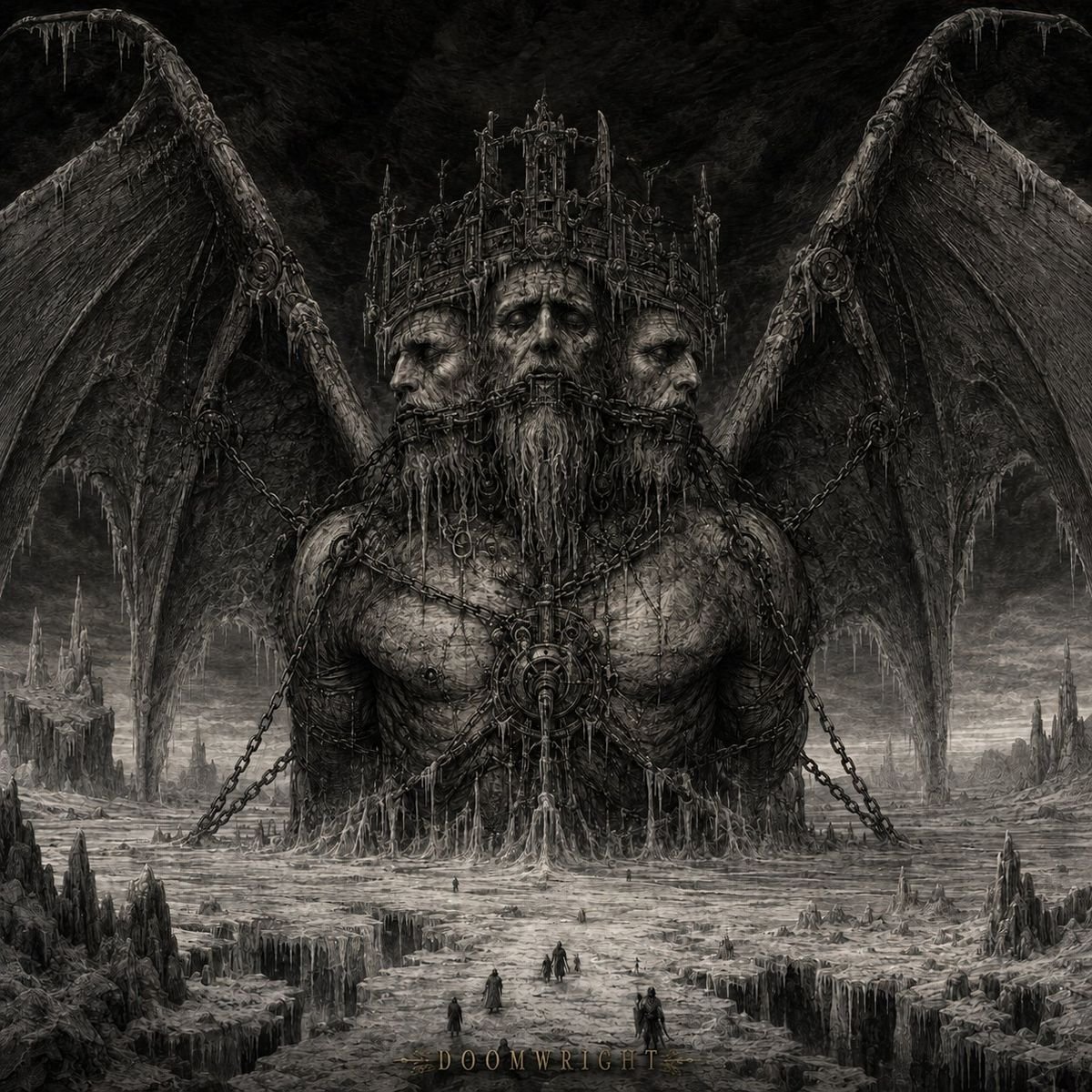
At the bottom there is no fire. The traitors are set in a frozen lake, and at the dead centre the emperor of the kingdom of sorrow beats his enormous wings and makes, with his own struggle, the very wind that keeps him frozen — mute, mechanical, without a single word. The two climb down the body of the giant and out, until the road at last turns upward, and opens on the one thing Hell had denied them: the sky, and the stars again.
Hell begins in the expectation of fire and ends in ice. The only way out is down — and then up, to see the stars again.